Fascinating Historical Facts About the Grand Canyon
Getting excited for an upcoming visit to the Grand Canyon? Whether you’re travelling to the Grand Canyon National Park, the Grand Canyon West, or the North Rim, you’ll find plentiful educational opportunities including museums, historic buildings, and rangers, tour guides, and Native American ambassadors to answer questions.
Before your trip to the Grand Canyon, you can learn some fascinating pieces of information about this incredible natural destination.
Grand Canyon Geology
How Old is the Grand Canyon?
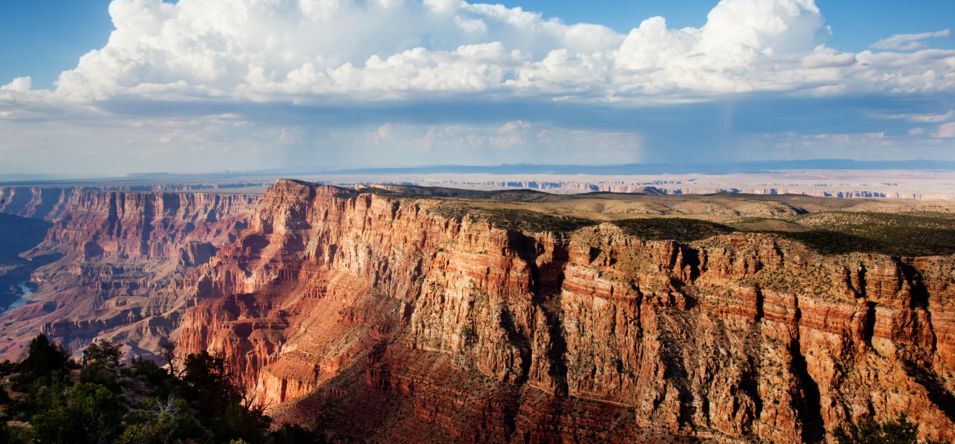
Geological experts estimate that the Colorado River began eroding the Grand Canyon approximately 70 million years ago and exposes a geologic history that dates back 1.2 billion years in the striped bands of the canyon walls.
Newest Rock Layer: the Kaibab Formation, (270 million years old)
Oldest Exposed Rock Layer: the Vishnu Basement Rocks, found near the bottom of the Inner Gorge. (about 1.7 billion years old)
How Big is the Grand Canyon?
The entire Grand Canyon National Park covers an area of 1,904 square miles. The canyon gorge spans 277 river miles long, reaches up to 18 miles wide, and is one mile deep at its deepest point.
Grand Canyon Location
Where is the Grand Canyon Located?
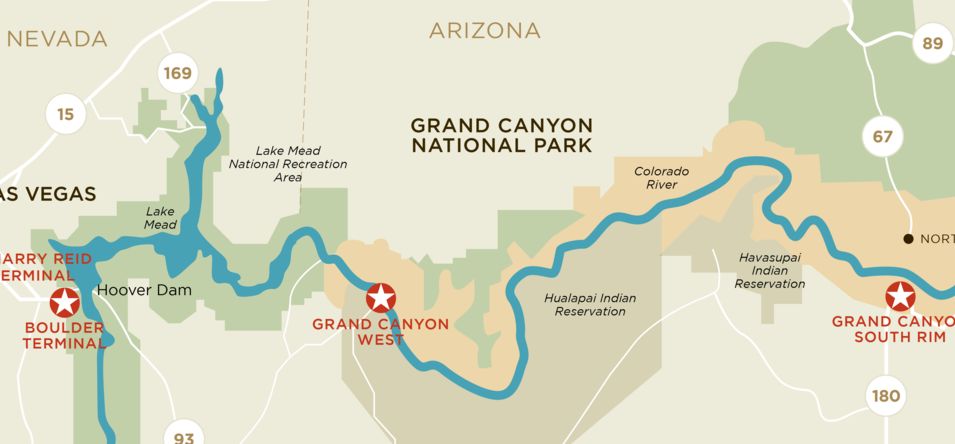
The Grand Canyon is divided into multiple rims: the South Rim - which is the official "Grand Canyon National Park", the North Rim - which is located directly across from the South Rim and is 1,000 feet higher in elevation, and the West Rim - home to the Grand Canyon Skywalk.
Located entirely in northwest Arizona, the Grand Canyon is divided into multiple rims: the South Rim - which is the official "Grand Canyon National Park", the North Rim - which is located directly across from the South Rim and is 1,000 feet higher in elevation, and the West Rim - home to the Grand Canyon Skywalk.
The Grand Canyon South Rim is approximately an hour and 20-minute drive from Flagstaff, Arizona and just over 4 hours from Las Vegas. Visitors from Las Vegas can also fly to the Grand Canyon South Rim aboard a 2 hour and 20-minute airplane flight.
The Grand Canyon West Rim is approximately a 3 hour and 20-minute drive from Flagstaff and a 2-hour drive from Las Vegas. Helicopter tours from Las Vegas can reach the West Rim in just 35 minutes.
Life and Nature at the Grand Canyon
Ancient Civilization Surrounding the Grand Canyon
There is evidence of human occupation within and around the Grand Canyon for thousands of years, and some of the earliest sites discovered date back 12,000 years. Native Americans have lived along its banks for centuries, with the earliest known tribe being the Anasazi.
The two most prevalent tribes that reside on reservations at the Grand Canyon today are the Havasupai and the Hualapai, the latter of which own the Grand Canyon West.
The Hualapai reservation encompasses about 1 million acres along 108 miles of the Grand Canyon and Colorado River. Meaning the "People of the Tall Pines," the Hualapai operate the Grand Canyon West’s most major tourist attraction: the Skywalk. This world-famous glass-bottomed walkway extends 70 feet out past the rim of the canyon, drawing close to a million visitors a year.
The Havasupai, also known as the "People of the Blue-Green Water," live on 3 million acres near the South Rim. The arrival of the Havasupai is set at around A.D. 1300, and they are known to be the only permanent, continuous inhabitants of the Grand Canyon.
The canyon is also described as the place of emergence for the Navajo, Hopi, Paiute, and Zuni.
Plants and Animals Found at the Grand Canyon
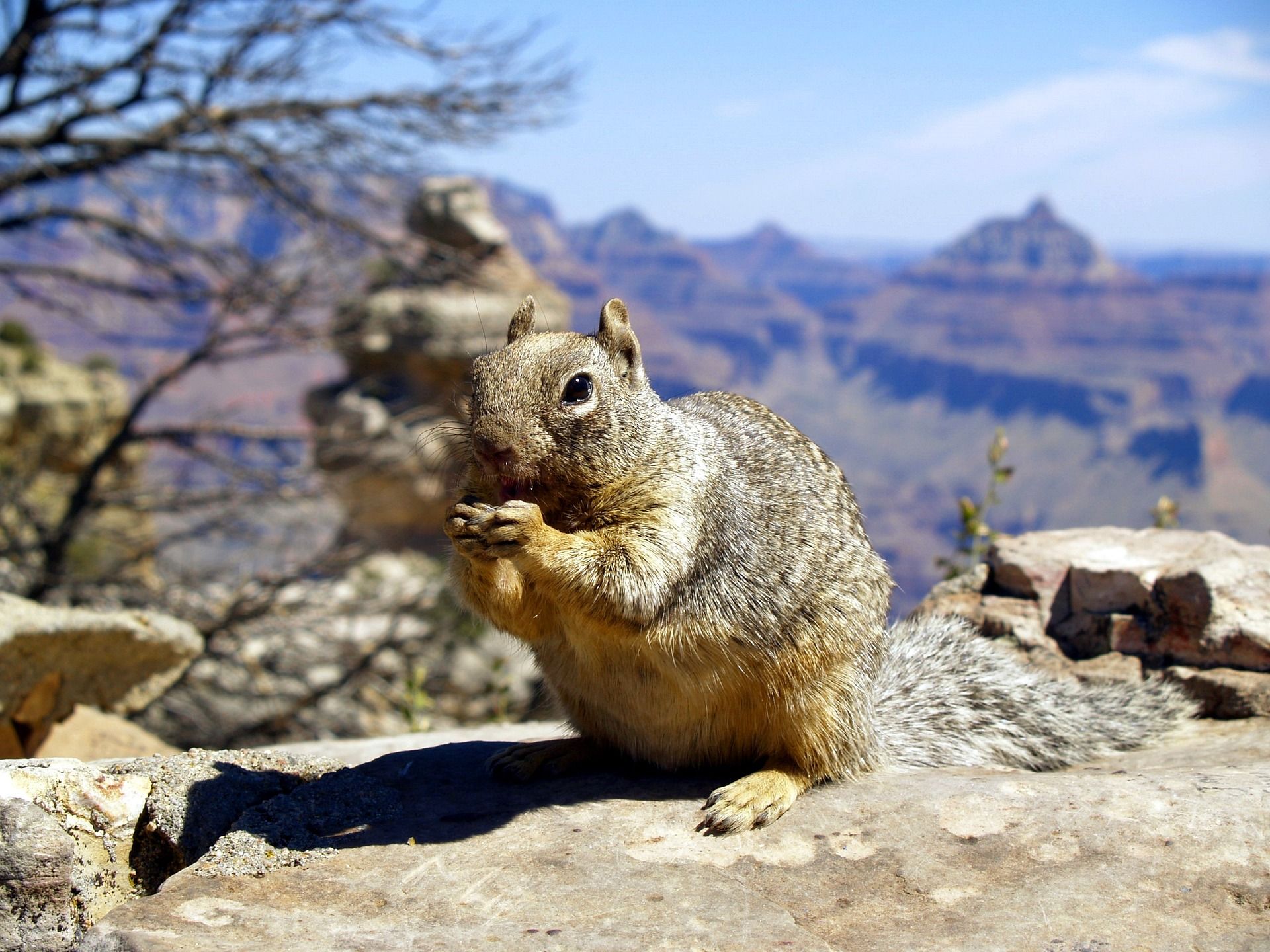
There is a huge variety of animals at the Grand Canyon. More than 80 species of mammals can be found within its boundaries, including bighorn sheep, cougars, elk, and coyotes. Most incredibly, many ancient fossils have been discovered throughout this area including dinosaur remains!
Additionally, more than 355 species of birds have been identified in the park. Tourists at the Grand Canyon can see the massive California Condors, swallowtail hawks, and even Bald Eagles - the national symbol of the United States.
There are also 89 plants classified as rare at the Grand Canyon that cannot be found anywhere else on Earth.
Grand Canyon Tourism and Attractions
How Popular is the Grand Canyon?
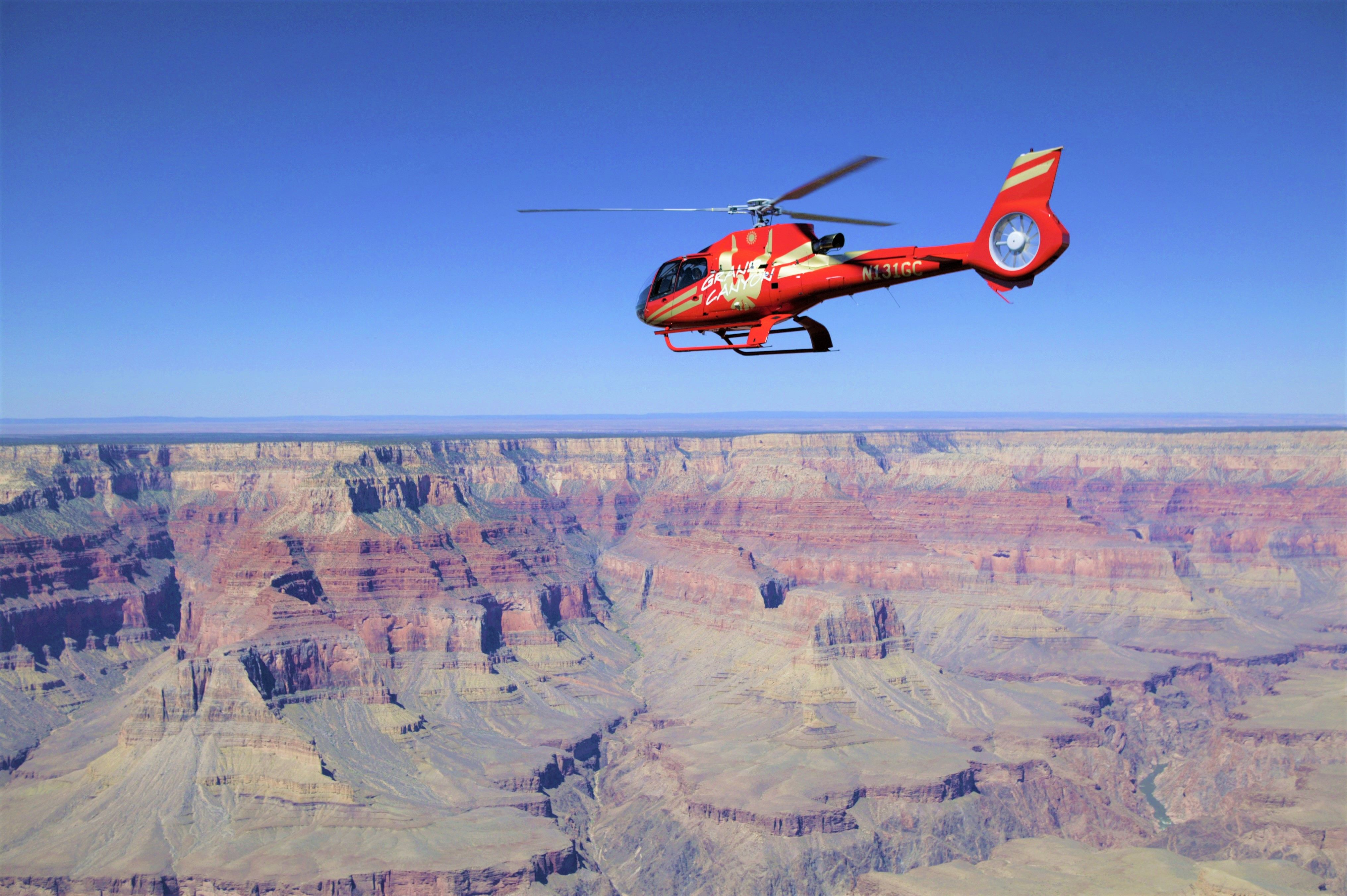
More than 5 million people from around the world visit the Grand Canyon each year - making it one of America's top tourist destinations. If you plan to travel to the Grand Canyon, determine which rim best fits your interests. The Grand Canyon National Park, or the South Rim, is the most developed region, offering visitors multiple dining options, a variety of lodging, shopping, hiking trails, and museums. Because of this, the South Rim receives the most tourist visitation. You can also explore the park aboard a Hummer tour or fly over the deepest and widest canyon gorges in a South Rim helicopter tour.
The Grand Canyon West offers less as far as hotels, restaurants, and shopping, but features the Skywalk Bridge and the once-in-a-lifetime opportunity to land on the canyon floor in a helicopter. You can also visit Hualapai Point, a Native American cultural center offering authentic handmade crafts, a restaurant, a shooting gallery, and a zipline.
Top Grand Canyon Tours
Grand Canyon National Park:
- Grand Canyon Air Tour Deluxe with Hummer Grand Canyon Tour: Fly from Las Vegas to the Grand Canyon South Rim and experience multiple lookout points aboard a military-style Hummer.
- Grand Canyon Deluxe with Helicopter Tour: Enjoy a sightseeing flight from Las Vegas, then board a helicopter upon arrival and soar over the deepest and widest canyon gorges.
- Grand Kingdom Helicopter Tour: Visitors to the Grand Canyon National Park can fly in a helicopter over 1.7-million-year-old rock formations as well as the Colorado River and the Kaibab Forest.
- Grand Canyon Signature Tour with Hike: Explore various famous lookout points in an open-air Hummer vehicle, then enjoy a guided hike on the iconic Grandview Trail.
Grand Canyon West:
- Grand Celebration Tour: Experience Hoover Dam, Lake Mead, and the Nevada desert from the sky on a helicopter tour from Las Vegas to the Grand Canyon West, where you’ll land on the canyon floor.
- Grand Voyager Tour: Relax on a peaceful airplane flight from Vegas to the Grand Canyon West, where a helicopter awaits to fly you to the canyon floor. There, you’ll enjoy a pontoon boat ride on the Colorado River.
- VIP Grand Canyon Heli, Boat, & Skywalk Tour: After exploring the canyon floor and the Colorado River via boat ride, you’ll also enter the park and receive entry onto the world-famous Skywalk.
- Over the Edge Grand Canyon Helicopter Tour & Boat: Independent visitors to the Grand Canyon West can also fly to the very bottom in a helicopter and ride along the Colorado River aboard a peaceful pontoon boat.
History of Grand Canyon Helicopter Tours
- The first helicopter tour over the Grand Canyon took place in 1965.
- Before being used for sightseeing, helicopters were first used at the Grand Canyon to transport massive sections of pipe materials to build the Grand Canyon Pipeline
- Elling Halvorson, owner of an Arizona construction company, took on this treacherous job and was a vital resource in building this important pipeline.
- After nearly endless requests from both locals and workers to fly over the canyon in a helicopter, Halvorson realized the opportunity to develop sightseeing helicopter tours for visitors around the world.
- Halvorson began creating Papillon Grand Canyon Helicopters, which has since become the world’s largest and longest-running air tour company.
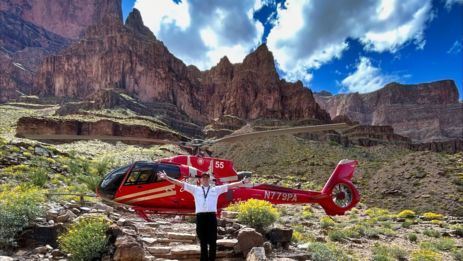
Fly to the Grand Canyon with Papillon!
Papillon is the world’s largest and longest-running air operator, and the only operator certified to fly the entirety of the Grand Canyon. We offer daily departures to both the South Rim and the West Rim, and each year we transport over 300,000 passengers from around the world to these incredible destinations. Browse our Grand Canyon tours from Las Vegas and start planning your adventure today!